Urban Sustainability and Smart Energy Infrastructure
Supported city development with smart energy systems that lowered emissions, reduced public energy use, and created a scalable model for sustainable urban growth.

January 2, 2026
Gastar Energy
Urban Renewable Energy
Project Overview
Digdaya partnered with a regional energy authority and local communities to deliver reliable, renewable electricity to remote rural areas with limited or unstable grid access. The project focused on replacing diesel-based power with a clean, community-owned solar microgrid system.
The Challenge
Many rural communities relied on diesel generators that were costly, unreliable, and harmful to the environment. Frequent power outages disrupted daily activities, limited access to education and healthcare, and restricted local economic growth. Grid expansion was not feasible due to geographic and infrastructure constraints.
Our Approach
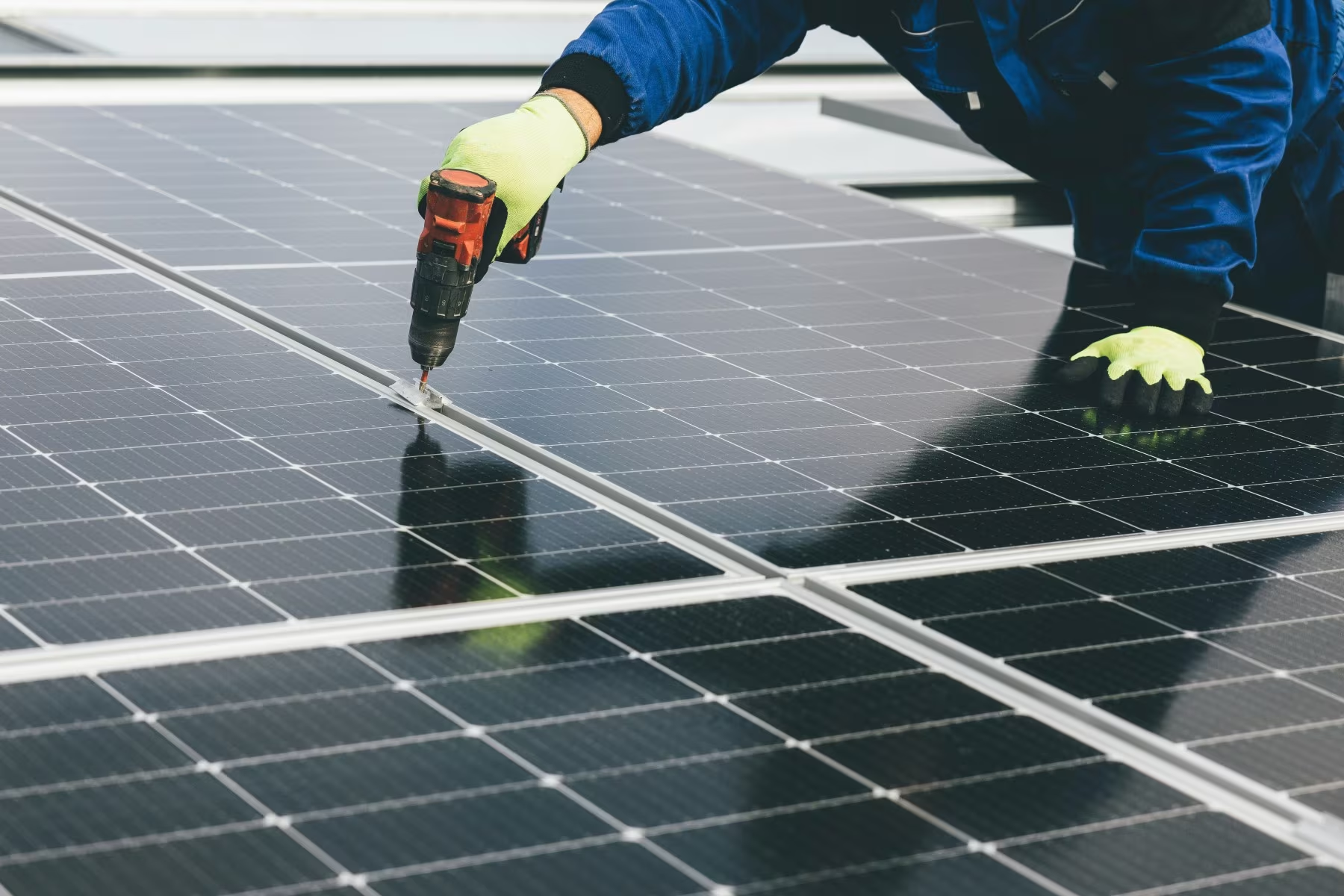
Digdaya conducted on-site assessments to understand energy demand patterns, environmental conditions, and community needs. A modular solar microgrid system was designed, combining photovoltaic panels, battery storage, and smart energy management to ensure consistent power supply.
Scope Implementation
- Solar panel installation with scalable capacity
- Battery storage for 24-hour electricity access
- Smart energy monitoring and load balancing
- Community training and technical handover
- Long-term sustainability and maintenance planning
Energy Accessibility
Ensuring stable and affordable electricity access for underserved rural communities where traditional grid expansion was not viable.
System Reliability
Designing a modular solar microgrid combined with battery storage to provide continuous power during day and night operations.
Community Empowerment
Training local residents to operate and maintain the system, creating long-term ownership and reducing dependency on external technicians.
Community Empowerment
Training local residents to operate and maintain the system, creating long-term ownership and reducing dependency on external technicians.
Impact & Result
The project delivered continuous and reliable electricity for homes, schools, and clinics, significantly improving daily life and essential services. By reducing diesel usage by approximately 70%, the initiative lowered carbon emissions and operational costs while supporting a cleaner energy system. Reliable lighting and connectivity enhanced education outcomes, and extended business hours helped stimulate local economic activity across the community.
Explore More Works
Community Solar Microgrid for Rural Electrification
Delivered reliable clean energy to remote communities through solar microgrids, reducing diesel reliance and improving daily life, education, and local economic activity.
Industrial Energy Efficiency Optimization Program
Helped a manufacturing company cut energy waste and costs by optimizing operations, introducing smart monitoring, and improving efficiency without disrupting production.